

- Home
- Investors Centre
- Sustainability
- Talent
- News
- Insights
- TH!NK
- Corporate Governance
- Who we are
- Board of Directors
- Community
- MCB Offices
Contact Info
International Women’s Day: Is our attitude toward gender issues shaped by when we are born?
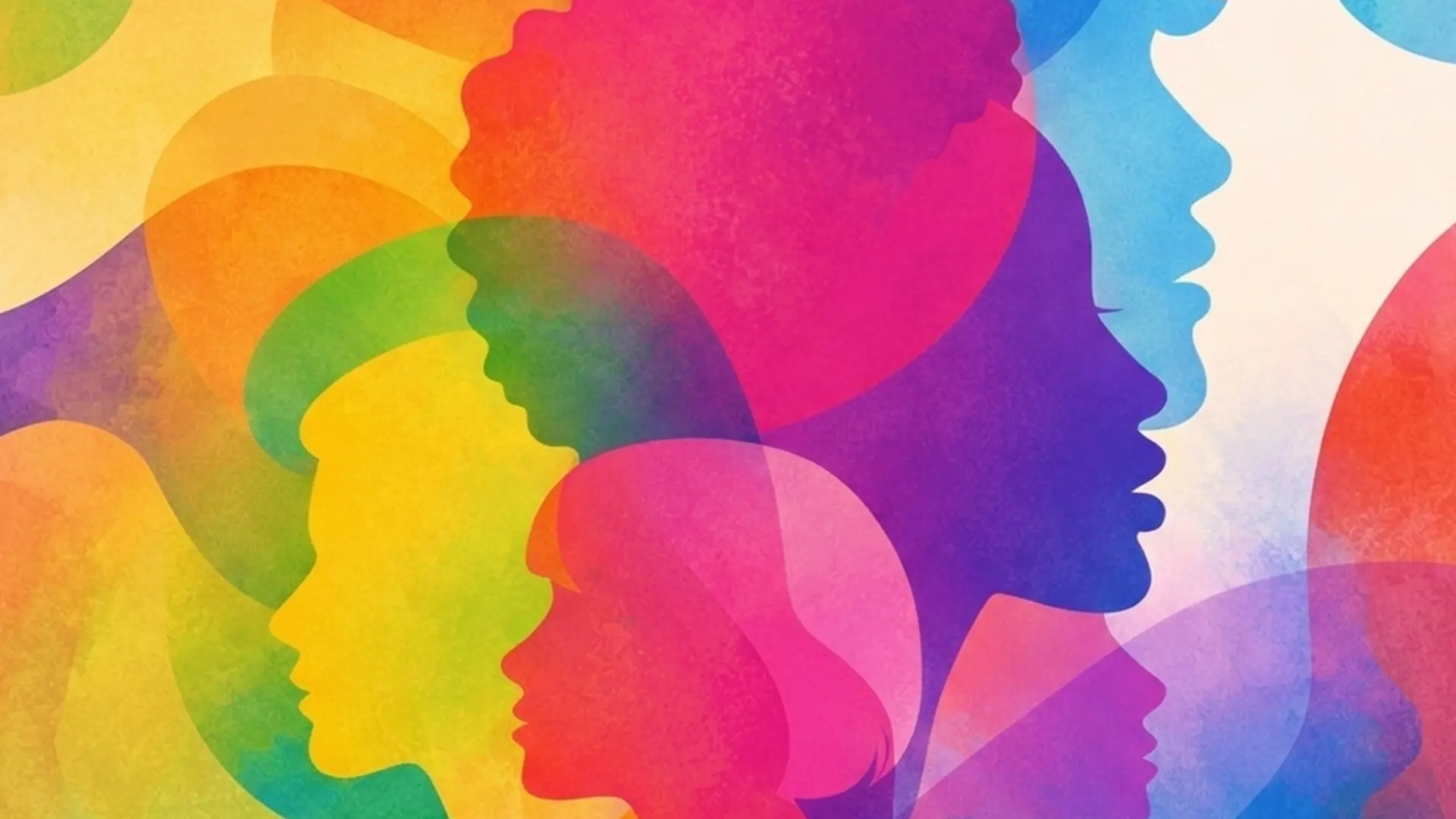
- Conventional wisdom says that attitude is shaped by age, but we decided to confirm - or disprove - the theory by speaking to a sample of MCB staff from all four generations.
- Culture may well be more dominant than age.
- Personalities and expectations are game changers for males and females.
While the United Nations is asking us to “give to gain” this year to mark another International Women’s Day, at MCB we sought to understand how generational attitudes shape gender dynamics.
We did this simply by asking a sample of MCB employees spanning four generations -Baby Boomers, Generation X, Millennials and Generation Z - to speak to us about their life experiences.
While it wasn’t immediately apparent that people from different generations have different perspectives on gender, it soon became clear that cultural influences have a somewhat greater impact on our colleagues' life experiences and worldviews.
A simpler time
A baby boomer who has just retired talked about how she felt her adolescence and young adult life were freer, and how she believes that it mostly didn’t occur to her late father to treat her and her three sisters any differently than her six brothers. “The only difference he made was as far as camping was concerned. While my brothers, who were involved in the Scout movement, regularly went camping as part of their activities, the girls weren’t allowed that same freedom, but that’s about it”, she recounts.
The veto on camping was seemingly just a cultural reflex, because when the time came, three of the four girls left the country for their studies abroad, a process that involved living away from the family and parental control for at least three years. That was over 45 years ago, and the parents, born in 1917 and 1919, respectively, belonged to what has become known as the Greatest Generation.
Different expectations, different perspectives
Closer to today, younger colleagues, those in their early to mid-twenties, better known as Gen Z, with Generation X parents (1965-1980), don’t always enjoy the same freedoms. Or perhaps it’s their expectations that are different.
In any event, they speak of this protective cocoon around them, “because we’re girls”. Girls who need protection; girls who can’t be expected to perform tasks deemed too masculine, like changing a tyre; girls who can’t be expected to go out “alone” with their friends; girls who have a curfew; girls who aren’t meant to leave their parents’ home before they get married. In short, girls – but really, adults – who feel like they need permission to do many things.
But where there’s control, rebellion is usually not far behind. A recurring theme among some younger female colleagues, whether younger Millennials or Gen Z, is that they describe being treated as “princesses” by their parents. While this could be perceived as something to be celebrated, it’s not necessarily the case. The term “princess” is often associated with daintiness, with the need for protection. And let’s face it, “protection” can be a double-edged sword.
One colleague says that being the family “princess” only left her feeling suffocated. She was almost never allowed to do what she wanted and had to be “taken care of”. While this probably came from a good place on her parents’ part, it eventually led to her leaving the family home prematurely.
Others have decided that the way to deal with overprotectiveness is to take it head-on – they watch football games and do their best to challenge stereotypes by going out of their way to prove they can look after themselves and don’t need to be treated differently because they’re girls.
Different lenses
How come people of roughly the same age can have different points of view, and yet others, separated by whole generations, can still see the world in a similar way? A male colleague, born in 2000, believes personality plays an outsized role in this regard.
At 26, he lives with his older brother on the ground floor of his parents’ two-storey house. He cleans up after himself as he believes that it’s not his mother’s job to still be mollycoddling her grown-up son. His brother, however, is not overly concerned with chores, and while he doesn’t expect his mum to clean after him, he’s happy to let her do it. She doesn’t seem to mind and still cooks for her whole family every day.
Our friend’s elder brother and sister are homebodies and lead a pretty contented life commuting between work and home. The same is true for most people he grew up with.
And so it was for him, until he walked away from a long-term relationship. As a result of the breakup, he now goes clubbing regularly. He says he is allowed to come and go freely, because “he’s a boy”. He doesn’t think his parents would have taken too kindly to the odd hours he keeps if he’d been a girl.
And yet, his female cousin, who was born abroad, is allowed to go out clubbing whenever she’s in Mauritius, provided she checks in regularly. “That’s the way I am going to be with my daughters one day”, he says, arguing that there are ways of looking out for a person’s safety without necessarily treating them like a different species.
Homogeny versus heterogeny
By going out to bars and clubs, this colleague meets people from vastly different backgrounds than the conservative one he grew up in, and this has helped reshape his worldview. This new experience has made him realise, for instance, that girls who go clubbing are no different from those who don’t. That a girl can think for herself, live independently, and still be worthy of respect.
Spending time with people with different realities also made him realise that he needs to take more responsibility for himself, depend less on others, and be more productive with his time.
This colleague argues that this fresh perspective has been more instructive and life-affirming than all the years he spent in secondary school. He says that he didn’t question the prevailing wisdom on traditional gender roles and expectations because at school, he was part of a pretty homogeneous bunch.
Happily single
Heterogeny often begets more liberal values. Colleagues from mixed lineage, irrespective of generation, testify to a greater openness in the family. One of them moved out of her parents’ home and into her own home a few years ago to live independently. Her 82-year-old father was supportive of her move.
Now nearing her forties, this colleague is the picture of the empowered, liberated woman, exemplifying the notion that a woman’s worth and purpose are no longer defined by marriage.
She feels that she’s already spent too long trying to justify her choice of remaining unmarried to society. And although independent living may not yet be the norm, the fact of the matter is that more and more women are making the choice to be “happily single”.
And yet it seems women will always be treated differently, whether truly for physiological reasons or to justify stereotypes.
The P word
In the 90s, news that a young, unmarried colleague was pregnant spread like wildfire at MCB. The feelings of shame and rejection she felt then, from all quarters, are now long gone, but they still leave a bitter taste years later.
Meanwhile, her then partner never had to deal with the stigmas associated with the pregnancy. The truth is that there have always been two rules for men and women in Mauritian society. You can look it up; it’s called gender essentialism.
Almost 20 years later, another young woman fell pregnant out of wedlock. She had to get married before her baby was born. It's still one of the unwritten rules of womanhood. She then went through a divorce, a challenging event which tested her resilience. She married again and has remained happily married to this day.
She's had more children since, and, as any mother will tell you, it's possible to love your kids while at the same time resenting the toll pregnancies take on your life. "As a working woman, I have always had to be cautious about falling pregnant because there’s always the possibility it could affect my professional life”, this colleague explains.
Because with pregnancy comes sacrifices in the form of things left unaccomplished and dreams unfulfilled. Like a career that takes a backseat with the arrival of a baby.
But it also means babies who grow into children to be loved and… protected. Who challenge you to your very core, pushing you to defer to what you know best. More often than not, you fall back on the way you were brought up.
Do we turn into our parents?
And here, another interesting dynamic comes into play. What is it that makes us choose to either reject or embrace our parents’ methods? Not everybody who has had a toxic upbringing will reproduce their experience; some will do their very best not to become their parents, while others will conclude that, although they resent the control dynamic, it did perhaps serve a purpose.
A colleague with daughters says she was forced to develop an accommodating attitude as she grew up because of a mother whose strong, assertive personality often set the tone at home. “I’m glad my girls don’t feel they have to walk on eggshells with me, as I had to with my mum”, she explains, adding that her household is a much more benign environment than the one she grew up in.
This is also a recurring theme: how mothers are either described as domineering or dominated.
While it’s impossible to generalise, a colleague recounts his single-parent upbringing. A divorced family, an absent father, a single mum who worked hard to put food on the table, but who was also so focused on her role to provide that she didn’t have time for affection.
The lack of a father and the emotional distance of his mother brought an over-reliance on other family members and resulted in a difficult childhood in the 1980s. His takeaway from this painful experience is the ultimate realisation that too many men the world over present the “wounded male” energy. This refers to the idea that there’s a distortion of natural masculine energy, which should embody qualities such as emotional intelligence, vulnerability, non-violent strength, and protection. Instead, this “wounded masculinity” is of the toxic variety, one that is familiar to far too many of us.
Toxic masculinity
On the one hand, there are stereotypes, and on the other, there’s misogyny. And the two are not equal in their impact. How society treats women can seem particularly perplexing, especially for women who have grown up in more liberal households. And this contradiction between the openness one experiences at home and the opposite attitude dished out by a more conservative system can be jarring.
A colleague who’s a lawyer talks about how the entire setup in a police station is built around hostility to female lawyers. “It could have been hostility to defence counsels in general if it weren’t for the fact that many police officers bend over backwards for many male lawyers. Maybe if I had a more affirming personality, it wouldn’t have affected me, but I doubt it. The fact that there aren’t any female lawyers specialised in criminal law in Mauritius says it all,” she said.
The evolved male
Anecdotal evidence suggests that Millennials have a different experience from Gen X, whether as children, parents, or partners. Millennials (born between 1981 and 1996) are largely the children of Baby Boomers (1946–1964) and some older Generation Xers (1965–1980).
Many Millennials' parents lived in a more open world, having had some sort of outside influence, whether at university (locally or abroad), work, or family, that “softened” them somehow. Or maybe it was the period they lived in, a time before the internet, when the country seemed relatively prosperous and safe.
In any event, colleagues of that generation talk about a softer and more open relationship with their parents. If the latter were a bit strict, it wasn’t too hard to get them to change their minds.
One colleague says she’s always felt that by the time her little brother was born, “my parents were too tired to discipline them. Their whole approach to parenthood was lax”. This “theory” seems popular among people of that age, suggesting that discipline was imposed half-heartedly. This, in turn, is reflected in many Millennials’ choice of partners and the way they treat their children.
The children of Millennials are mostly what are known as Alphas. Born between 2010 and 2025, it is expected that this generation will embrace greater inclusivity and diversity through exposure to pop culture and a more laid-back upbringing. Most of them have fathers who are nurturing, loving, and emotionally available, rather than stoic or distant. At least, that’s the conventional wisdom. Questioned about their partners’ attitudes toward their couple and their families, our Millennial colleagues confirm a definite break from their upbringing, with fathers more active and supportive than ever in their children’s and wives’ lives.
All bets are off
This leaves one question unanswered: what of women’s mental load? Will those who choose a partnership, motherhood, and a career be relieved of the burden of organising and executing too many things in their personal and professional lives? Will they still have to choose between their career and their families at some point in their lives?
If the answer is anybody’s guess, there is one conclusion that is evident from our colleagues’ testimonies: the role parents have in shaping their offspring’s attitude towards gender dynamics, generation notwithstanding.


Recent Articles


.webp?sfvrsn=91532dc8_1)

TH!NK


.webp?sfvrsn=60d1e308_1)
Subscribe to our Email Alerts
Stay up-to-date with our latest releases delivered straight to your inbox.
Contact
Don't hesitate to contact us for additional info
Email alerts
Keep abreast of our financial updates.