

- Home
- Investors Centre
- Sustainability
- Talent
- News
- Insights
- TH!NK
- Corporate Governance
- Company Profile
- Board of Directors
- Community
- MCB Offices
Contact Info
War in the Middle East: Macroeconomic assessment for Mauritius
Setting the scene
Nearly two weeks after the onset of the war in the Middle East, the economic fallout is already becoming visible. Energy markets reacted sharply in the initial phase of the conflict, with oil prices briefly surging to levels last seen during the 2022 energy shock, reflecting fears of a prolonged disruption to supply routes - particularly through key maritime chokepoints such as the Strait of Hormuz. Prices have since partially retracted, following remarks by the US President suggesting that the conflict could be resolved ‘very soon’ and the International Energy Agency approving the release of 400 million barrels of oil, helping to temper some of the immediate risk premium embedded in markets. Nevertheless, volatility remains particularly elevated as the conflict persists, underscoring the fragility of sentiment and the high degree of uncertainty surrounding the outlook.
For small, open and import‑dependent economies such as Mauritius, these dynamics constitute a significant external shock, transmitted through our regional exposure and amplified by rising import costs and weakening global demand. At this stage, the shock is best characterised as cost‑push and stagflationary in nature with inflationary pressures rising while the growth momentum softens. The scale of the impact will depend critically on the severity and duration of the conflict.
Channels of transmission to Mauritius
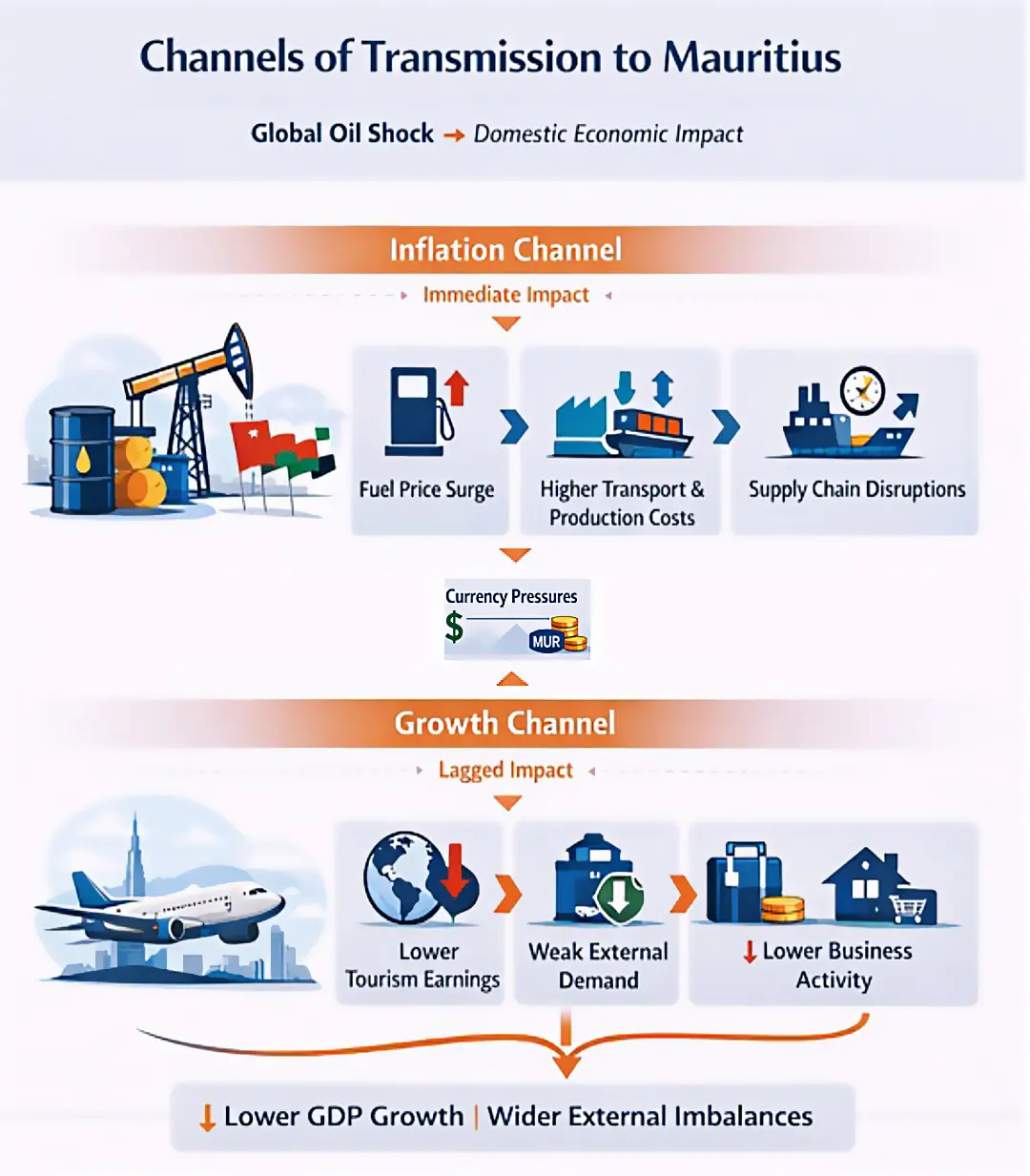
The most immediate transmission is through inflation. A rise in global oil prices could feed directly into domestic fuel and transport costs and into electricity tariffs and broader production costs, ratcheting up cost pressures across the economy. This channel is particularly relevant for Mauritius, where petroleum products account for around 20% of the total import bill, with the bulk sourced mainly from Oman, leaving the economy structurally exposed to Gulf‑related price and supply shocks. Fuel carries a notable weight in the consumer price index, implying a relatively rapid pass‑through to headline inflation. The conflict is also disrupting fertiliser supply chains, heightening risks to food security and is likely to add to upward pressure on food prices. Around one‑third of global seaborne fertiliser trade transits the Strait of Hormuz, making the effective closure of the passage a material risk for global fertiliser availability. Also, shipping and supply‑chain disruptions through higher insurance premia, rerouting and delivery delays could raise the cost of intermediate inputs and selected consumer goods, adding a second layer to imported inflation and compressing margins in import‑intensive sectors.
The impact on growth is likely to materialise with a lag, primarily through weaker external demand and investor confidence. Tourism represents a key transmission channel, as illustrated by the temporary suspension of Emirates flights, highlighting how disruptions at major transit hubs can quickly spill over into travel and business flows. In 2025, Emirates carried close to 309,000 tourists to Mauritius from key European source markets, underscoring the sensitivity of arrivals to developments affecting the Dubai hub. More broadly, softer global demand, heightened uncertainty and a likely rise in air ticket fares could weigh on arrivals and tourism receipts - particularly given the growing share of medium‑ to lower‑end visitors - with knock‑on effects on consumption, related services and the current account.
FX dynamics may amplify the above pressures. Since the onset of the war, the US dollar has strengthened amidst heightened risk aversion, exerting pressure on the rupee. This comes at a time when the external position is also likely to weaken, as softer global demand and disruptions to travel and trade weigh on FX inflows from exports of goods and services while rising global commodity prices further inflate the import bill. The combination of dollar strength and a deterioration in the external outlook compounds imported inflation pressures, while also weighing on GDP growth.
Moreover, uncertainty surrounding fuel imports from Oman could exacerbate risks to energy security, although it is worth noting that the authorities have moved swiftly to secure alternative supply channels, including negotiations with India. Even so, higher prices could complicate fiscal consolidation efforts. While higher fuel prices may generate some offsetting revenue effects, additional measures could be required to protect vulnerable households and firms from rising living costs, with weaker growth likely to constrain fiscal space. Concurrently, subdued investor confidence amidst the war could weigh on investment flows through the MIFC, though the ongoing situation also creates an opportunity to reinforce the jurisdiction’s positioning as a stable and neutral investment conduit.
MCB staff estimates and AI generated
Scenario-based macroeconomic impact
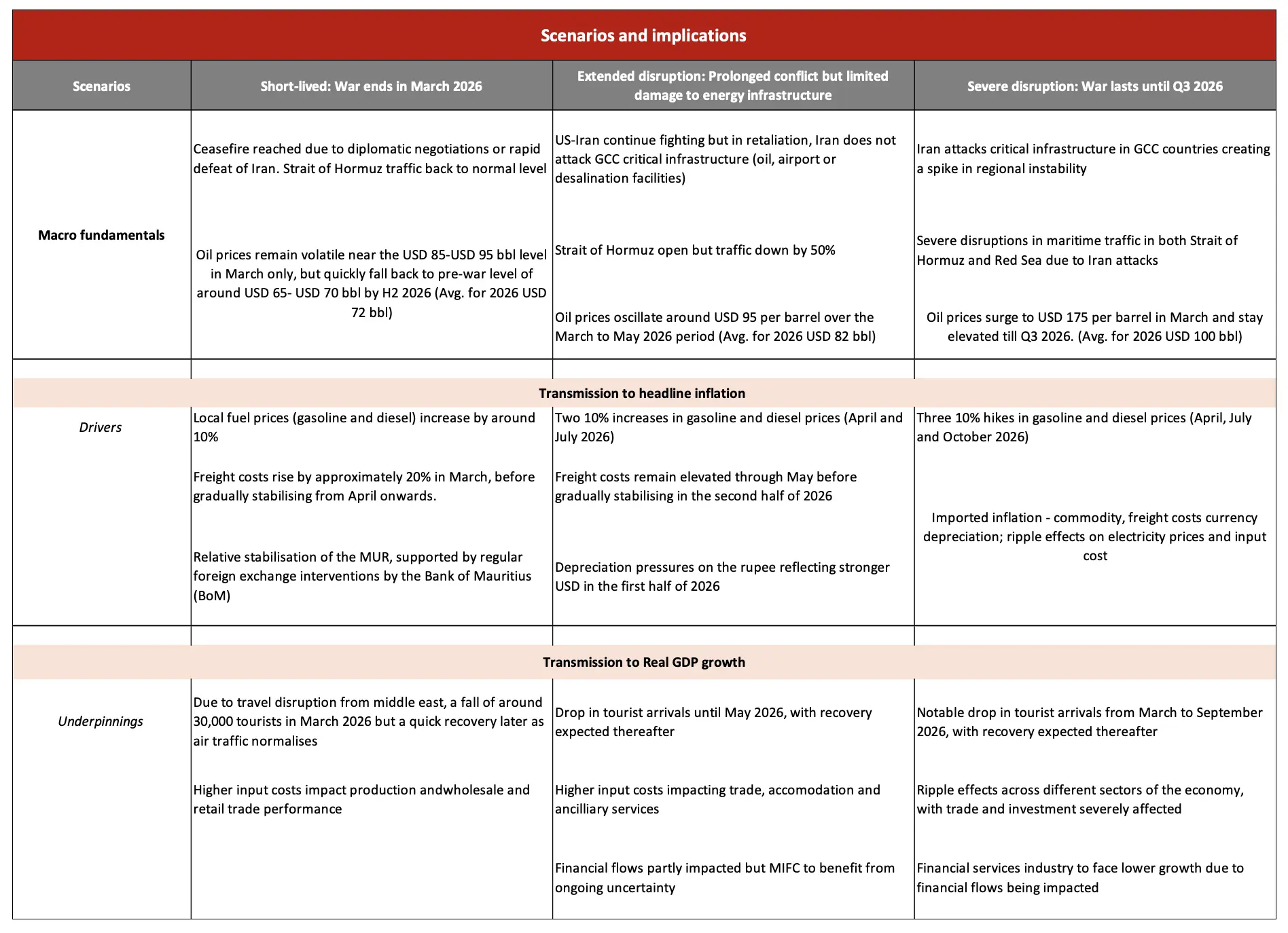
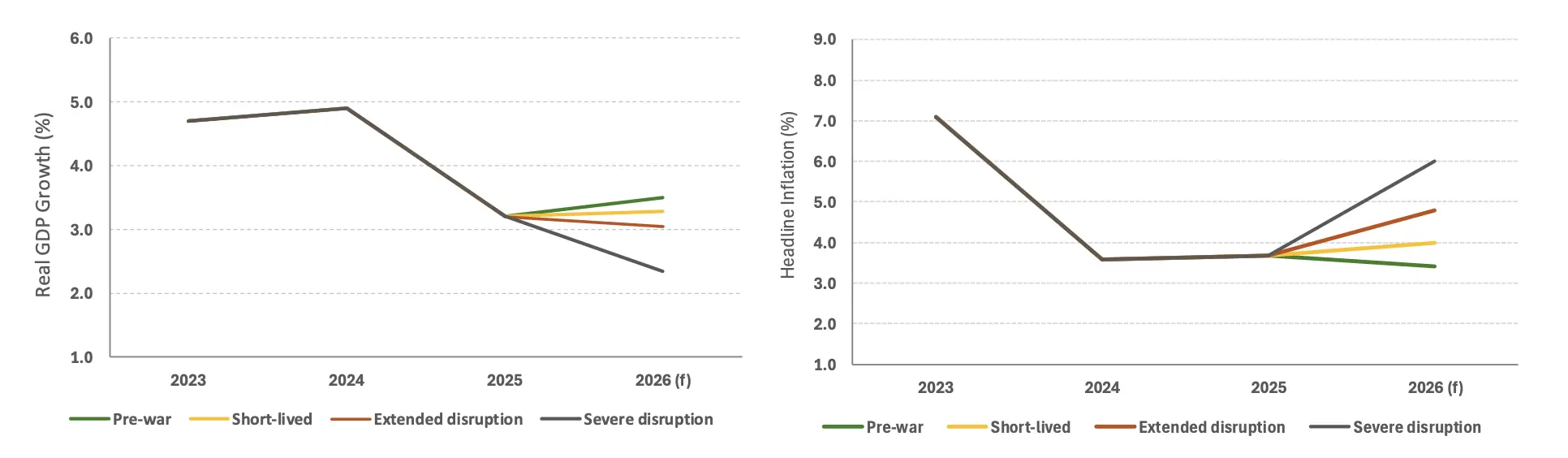
Given the high degree of uncertainty, a scenario‑based approach provides a more informative framework than point forecasts at this stage. The implications are set out in the table below and illustrative macroeconomic outcomes are shown in the charts that follow.
Macroeconomic outcomes
MCB staff estimates
Strategic implications and opportunities
While the near‑term macroeconomic impact of the conflict as illustrated above is negative with potential implications for monetary policy and the country’s sovereign credit profile, the event also reinforces a set of strategic priorities for Mauritius, particularly the need to enhance resilience to external shocks in an increasingly volatile global environment. The shock underlines the importance of diversifying exposure to external markets and supply chains. Reducing reliance on a narrow set of source markets and transit routes - whether for energy, food or key intermediate inputs - can help cushion the economy against future disruptions. This includes strengthening logistics resilience through diversified shipping routes and investing in adequate port capacity and storage/warehousing infrastructure to improve buffering capacity during periods of disruption. In parallel, deepening regional trade links can further strengthen resilience. In this respect, Africa represents a natural avenue to support diversification, as a destination for exports but also as a source of trade, investment and regional value‑chain integration, in line with the broader AfCFTA agenda.
The conflict also further illustrates the vulnerability created by dependence on imported fossil fuels. Accelerating the transition towards renewable energy is therefore both a sustainability objective and also a core resilience imperative. A faster rollout of renewables and energy‑efficiency investments would help dampen imported inflation pressures, reduce exposure to geopolitical risk premia embedded in energy prices and alleviate pressures on the external balance.
In the current environment, some regional international financial centres that have traditionally benefited from scale and connectivity, such as Dubai, may face greater scrutiny from investors as geopolitical risk becomes more salient, potentially tempering their relative attractiveness. At the same time, other centres have moved swiftly to reinforce their competitiveness through targeted policy responses. Notably, Hong Kong has recently announced new tax incentives aimed at attracting family offices and private wealth, as part of a broader effort to capture flows amidst heightened geopolitical uncertainty. In this context, Mauritius can further strengthen its positioning as an International Financial Centre, especially as a neutral and stable platform for Africa‑facing investment and structuring, rather than as a direct competitor to larger hubs. While such opportunities should not be overstated, the current environment could generate incremental diversification flows, reinforcing Mauritius’ role as a trusted intermediary between global capital and African growth opportunities.
MCB Research
If you have any questions or need assistance, our dedicated support team is here to help:
Research desk on [email protected] or MCB Global Markets Team on [email protected]
Disclaimer: “This publication is provided for general information purposes only and should not be construed as investment advice, a recommendation, an offer or solicitation to buy or sell any financial instrument or to participate in any trading strategy. The views and opinions expressed are those of the author(s) as of the date indicated and are subject to change without notice.
They do not necessarily represent the views of The Mauritius Commercial Bank Ltd (“MCB”) or any of its affiliates. Although the information contained herein is obtained from sources believed to be reliable, MCB makes no representation or warranty, express or implied, as to its accuracy, completeness, or fitness for any particular purpose. Past performance is not indicative of future results, and all investments involve risk, including the possible loss of principal.
Neither MCB nor any of its directors, officers, or employees accepts any liability for any direct or consequential loss arising from any use of this publication or its contents. Recipients should seek independent financial, legal or tax advice before making any investment decisions.”


Recent Articles



TH!NK





Subscribe to our Email Alerts
Stay up-to-date with our latest releases delivered straight to your inbox.
Contact
Don't hesitate to contact us for additional info
Email alerts
Keep abreast of our financial updates.